Custom tin packaging for cookies and biscuits can increase shelf appeal, improve product protection and enhance gift value. However, choosing the right tin involves more than selecting an attractive shape or artwork.
Buyers should consider the cookie dimensions, packing arrangement, tin shape, lid structure, internal packaging, printing process, food-contact requirements, order quantity and delivery schedule. This guide explains the main factors to evaluate before starting a custom cookie tin packaging project.
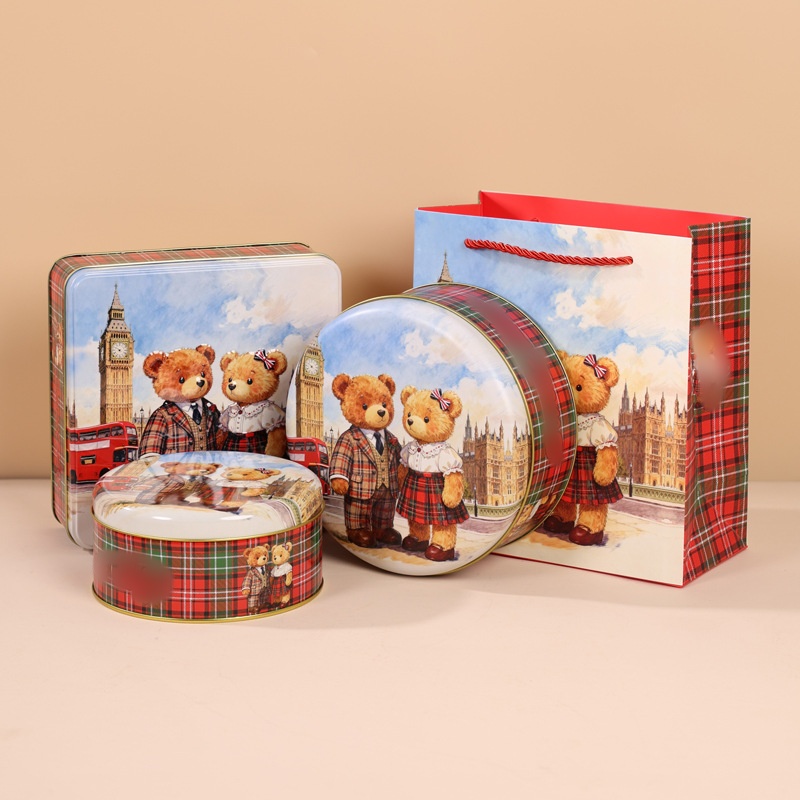
Custom-printed tin packaging can enhance the gift appeal and shelf presentation of cookies and biscuits.
1. Start with the Cookie Size and Packing Method
Before selecting a tin size, confirm the dimensions, quantity and arrangement of the cookies or biscuits.
The required internal space will depend on several factors:
- Cookie diameter, thickness and shape
- Number of cookies in each tin
- Single-layer or multi-layer arrangement
- Individually wrapped or unwrapped products
- Use of paper cups, dividers, trays or sealed bags
- Space required to protect the cookies during transportation
For example, delicate butter cookies may need paper cups or a fitted tray to reduce movement and breakage. Individually wrapped biscuits may require more internal space but can offer better hygiene and portion control.
When possible, provide the packaging supplier with physical product samples, cookie dimensions or a simple packing layout. This will help determine the appropriate internal dimensions and reduce the risk of selecting a tin that is too large or too small.
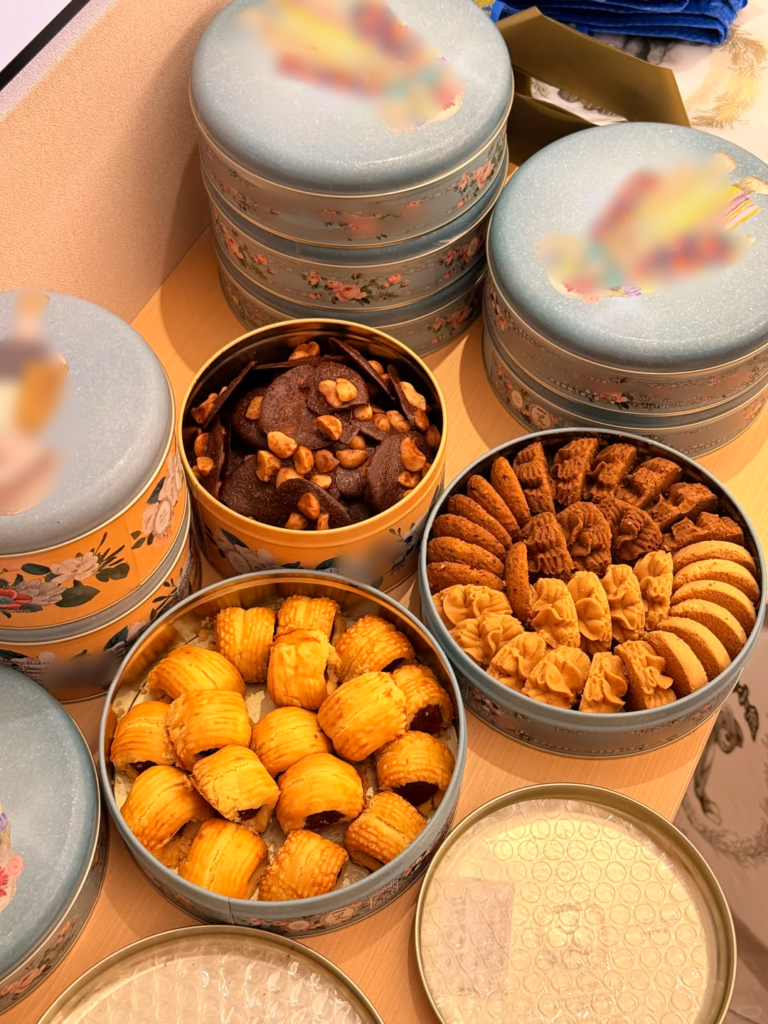
Cookie dimensions, quantity and packing arrangement should be confirmed before selecting the appropriate tin size.
2. Choose the Right Tin Shape
The tin shape affects product arrangement, shelf presentation, transportation efficiency and overall brand appearance.
Common options include:
- Round tins: A traditional choice for butter cookies, assorted biscuits and seasonal gifts.
- Square tins: Provide efficient internal space and are suitable for stacked or arranged biscuits.
- Rectangular tins: Ideal for long biscuits, wafers, cookie assortments and gift sets.
- Heart-shaped tins: Suitable for Valentine’s Day, weddings and promotional gifts.
- Tall tins: Often used for stacked biscuits, wafers or products packed vertically.
- Custom-shaped tins: Create stronger visual recognition for licensed, promotional or collectible packaging.
Round tins offer a classic gift presentation, while square and rectangular tins usually make more efficient use of packing and display space. Special shapes can strengthen brand recognition but may require new tooling and a higher initial investment.
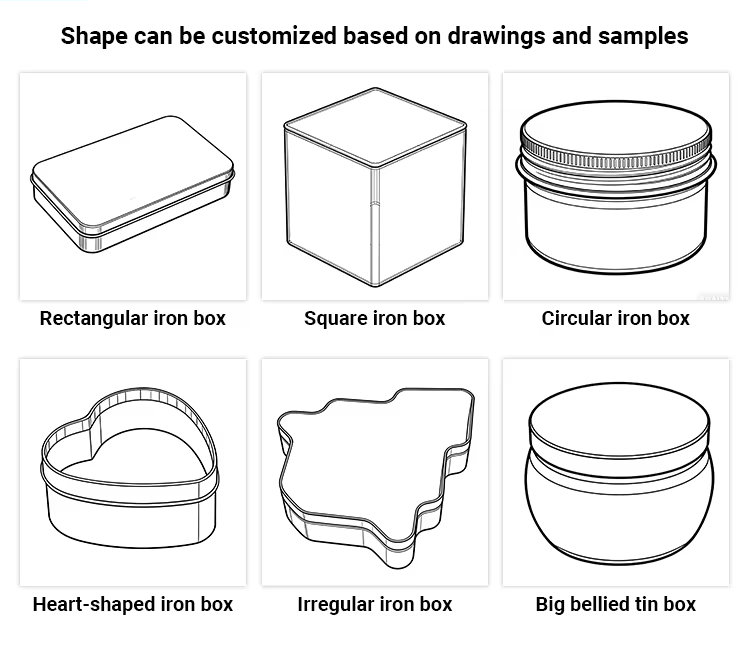
Tin shapes can be selected or developed according to the product dimensions, packing method and brand requirements.
3. Existing Mold or New Tooling?
Using an existing mold for custom tin packaging for cookies can reduce tooling costs and shorten the development process.
Choosing an existing mold does not mean the packaging must look generic. The following elements can still be customized:
- Exterior artwork
- CMYK or Pantone color printing
- Glossy, matte or textured finishes
- Embossed or debossed details
- Internal trays and dividers
- Different artwork for flavors, seasons or export markets
SENCANTONG has access to more than 10,000 existing mold options and can compare your required dimensions with available round, square, rectangular and special-shaped tins.
New tooling may be appropriate when the project requires a unique size, exclusive structure or distinctive brand shape. Before developing a new mold, buyers should compare the required dimensions with existing tooling to determine whether a close alternative is available.
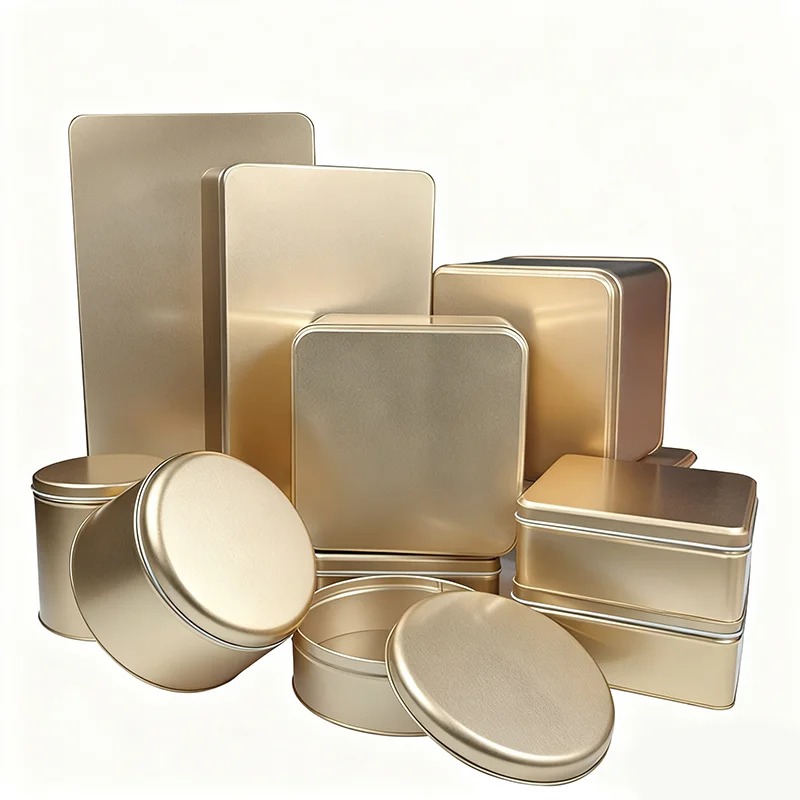
Existing tin molds are available in a variety of shapes and sizes for cookie and biscuit packaging projects.
4. Select the Lid and Internal Packaging Structure
The lid and internal structure influence convenience, protection and the customer’s unboxing experience.
Common lid structures include:
- Separate slip lid
- Step lid
- Hinged lid
- Window lid
- Plug lid
- Special decorative lid
A separate lid is widely used for traditional cookie tins, while a hinged lid can improve convenience and encourage consumers to reuse the packaging. A window lid allows the product to be visible, but the window material and assembly method should be evaluated according to the required food-contact and recycling standards.
Cookies can be packed directly inside a suitable food-contact tin, but many projects use additional internal packaging. Available options may include:
- Food-grade PET or PP trays
- Paper trays and dividers
- Greaseproof paper cups
- Food-grade sealed bags
- Individually wrapped packaging
- Paper or plastic inserts
The most suitable option depends on the cookie shape, oil content, fragility, required shelf life and destination-market regulations.

5. Select Printing, Embossing and Surface Finishes
Printing and surface finishing determine how the packaging communicates the brand identity.
CMYK printing is suitable for detailed illustrations and photographic artwork. Pantone color printing can provide greater consistency for important brand colors. Depending on the design and production requirements, both methods may be combined.
Common customization options include:
- CMYK printing
- Pantone color printing
- Gloss varnish
- Matte varnish
- Textured matte finish
- Protective clear varnish
- Hot foil stamping
- 2D or 3D embossing
- Debossing
- Holographic effects
Embossing adds depth and tactile value to logos, illustrations, borders and decorative details. However, the embossed area should be evaluated according to the tin structure and artwork. Embossing too close to an edge, seam or curved area may affect the final result.
For seasonal collections, the same tin mold may be used with different artwork for Christmas, Easter, anniversaries, flavors or export markets. The feasibility and minimum quantity for each artwork should be confirmed before sampling.
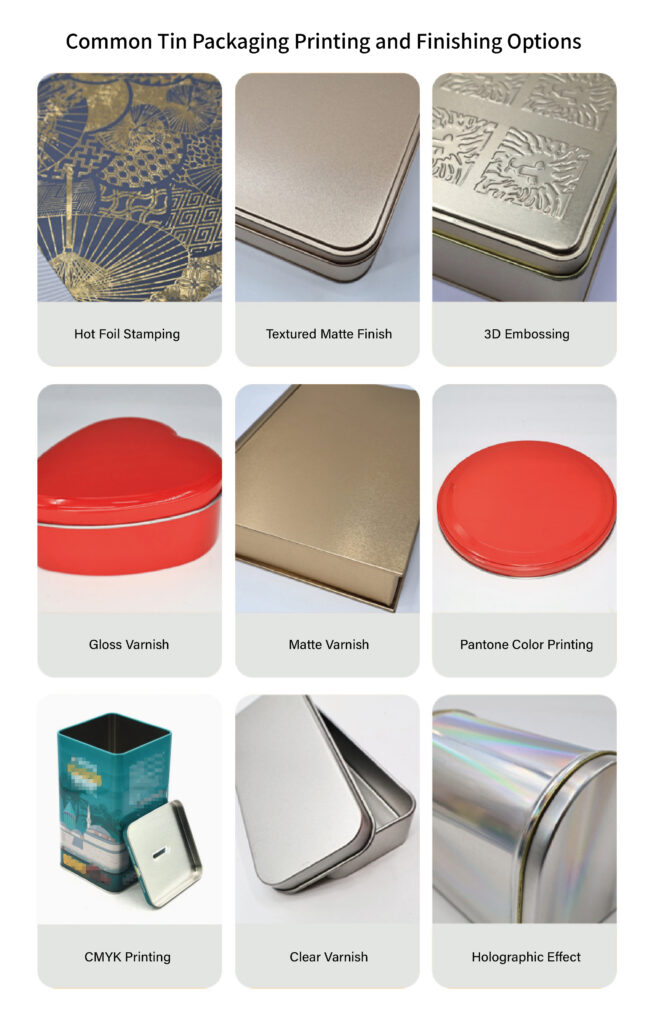
Common printing, embossing and surface finishing options for custom tin packaging.
6. Confirm Food-Contact and Testing Requirements
Food-contact requirements are an important consideration when developing custom tin packaging for cookies, especially when the product directly contacts the metal surface.
The buyer should first clarify whether the cookies will:
- Directly contact the metal surface
- Be placed in paper cups or an internal tray
- Be packed inside a sealed food-grade bag
- Be individually wrapped
Testing requirements vary according to the destination country, food type and contact method. Depending on the project, supporting documents or testing may be arranged for food-contact coatings, FDA, LFGB, BPA-free, heavy metals and migration requirements.
Internal trays, bags, paper cups and other components should also comply with the applicable requirements when they come into direct contact with food.
Buyers should provide the required standards before quotation and sampling. This helps the supplier select the appropriate coating, internal packaging and testing plan.
7. Understand MOQ, Sampling and Production Lead Time
For many existing cookie tin molds, the typical minimum order quantity starts from approximately 3,000–5,000 pieces.
The final MOQ depends on:
- Tin size and structure
- Printing process
- Surface finishing
- Number of artwork designs
- Internal packaging requirements
- Testing requirements
- Production schedule
If several flavors or seasonal designs use the same tin mold, split-artwork production may be possible. However, the minimum quantity for each design should be confirmed separately.
Sampling is recommended before mass production to check the tin size, structure, artwork position, colors and embossing details. Printed production samples generally require more time and cost than plain existing samples.
Production lead time depends on the quantity, structure, printing process, internal packaging and factory schedule. Seasonal projects—especially Christmas packaging—should be started early enough to allow time for artwork confirmation, sampling, production, inspection and shipping.
8. Prepare the Information Required for a Quotation
Providing complete project information helps the supplier prepare a more accurate recommendation and quotation.
Before requesting a quotation, prepare the following details:
- Preferred tin shape
- Required external or internal dimensions
- Cookie dimensions and packing arrangement
- Estimated order quantity
- Number of artwork designs
- Preferred lid structure
- Internal tray or packaging requirements
- Printing and embossing requirements
- Food-contact and testing requirements
- Destination country or port
- Required delivery date
If the final tin size has not been confirmed, provide the cookie dimensions, quantity per tin and preferred packing method. The supplier can then recommend suitable existing molds for evaluation.
Need Help Choosing a Cookie Tin?
If you are developing custom tin packaging for cookies, biscuits or seasonal gifts, send us your preferred size, order quantity, artwork and packing requirements.
SENCANTONG supplies custom tinplate packaging with access to more than 10,000 existing mold options. Available customization includes CMYK and Pantone printing, 2D and 3D embossing, gloss and matte finishes, internal trays and food-contact-compliant coating options.
We can recommend a suitable existing mold or evaluate new tooling according to your product and packaging requirements.
Email: ava@sencantong.com
WhatsApp: +86 166 2062 9832
Website: www.sencantong.com